
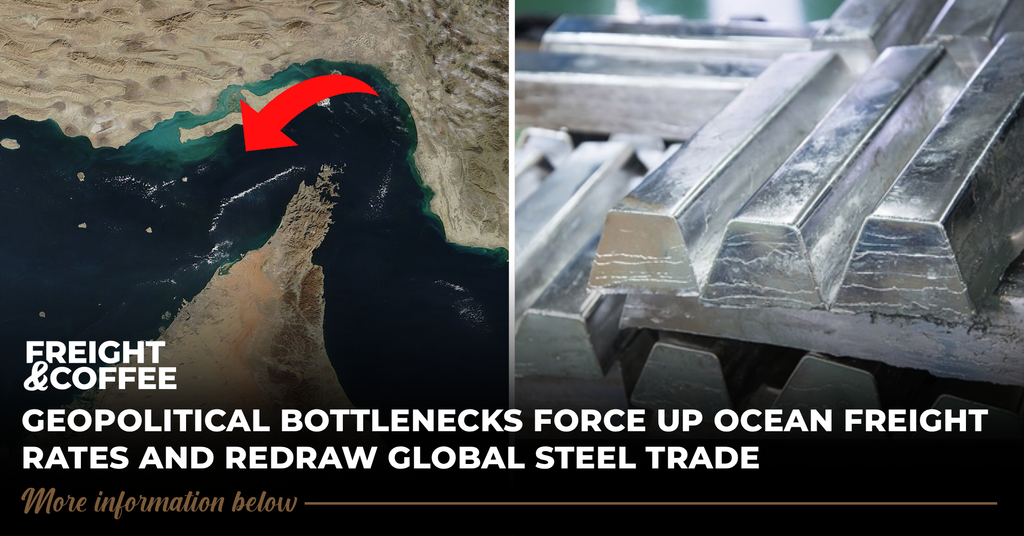
Escalating geopolitical risks across critical maritime choke points are pushing up ocean freight rates and forcing a massive realignment of global metals and raw materials logistics. Here is your fast-paced supply chain update brought to you by Freight&Coffee ☕🚛.
1. Choke Point Restraints Drive Down Tonnage and Force Voyage Lengthening
A recent market report from Signal Ocean senior analyst Maria Bertzeletou highlights how geopolitical conflict is squeezing vessel supply and extending voyage transit times across international steel corridors.
- Strait of Hormuz Plunge: Steel intake through the Strait of Hormuz dropped by 65%, falling from 10.95 million metric tons in Jan–Aug 2025 to just 3.8 million metric tons over the same period in 2026.
- Black Sea Cargo Squeeze: Ukrainian seaborne steel and mineral cargo loadings hit a major low, dropping from 7.7 million metric tons in 2021 to only 0.5 million metric tons in 2026.
- Rising Bunker Fuel Costs: Heightened geopolitical risk in energy-producing regions is driving up marine fuel prices, placing extra upward pressure on ocean freight quotations.
- Freight Rate Drivers: Analysts emphasize that geopolitical risk has become a primary factor in determining ocean charter rates, right alongside the core balance between vessel supply and cargo demand.
- Source: Read the full report directly on EUROMETAL.
Stay Connected with Freight&Coffee ☕🚛
Freight&Coffee brings you daily supply chain insights, breaking transportation news, podcasts, and social updates.
📸 Follow: Get daily news bites and industry content on our Instagram page:
👉 Follow Freight&Coffee on Instagram