
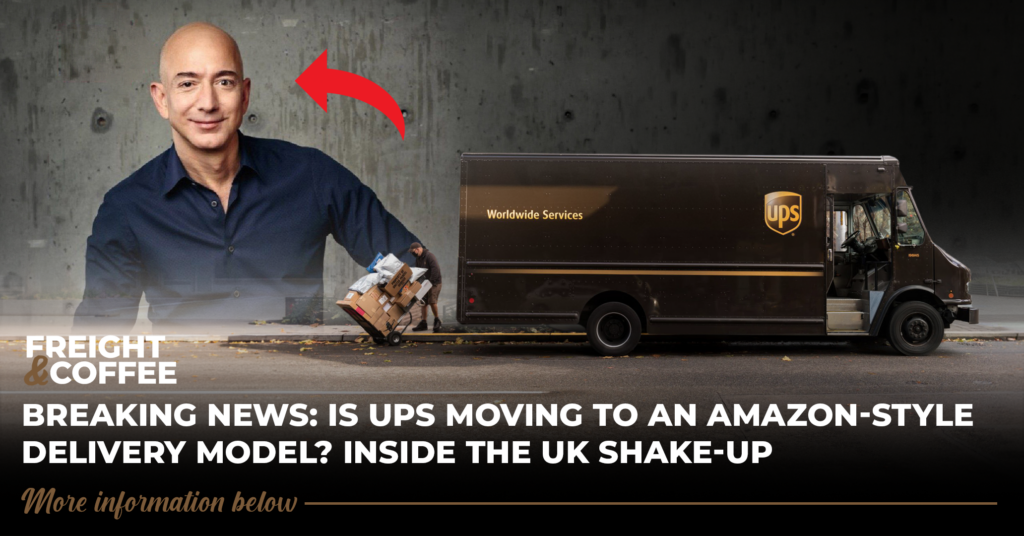
The world of global logistics and transportation just got hit with some major news. In a move that is sending shockwaves through the supply chain community, shipping giant UPS is reportedly planning a massive shift in how it handles final-mile deliveries across the pond.
According to a recent report by FreightWaves, UPS is exploring plans to completely phase out its directly employed, frontline delivery drivers in the United Kingdom by June 2027.
Instead, the company looks to be pivoting toward an outsourced model, leaning heavily on third-party couriers and independent contractors.
The Details: A Major Logistics Shift
This breaking news highlights a massive structural change for UPS in the UK. According to Unite, the UK’s largest labor union, this transition could cut over 3,000 direct delivery roles across 51 operating centers, shrinking UPS’s direct UK frontline workforce from 4,000 down to just 800.
While initial union reports suggested a shift toward a pure “gig-economy” Uber-style app model, industry insiders familiar with the matter tell FreightWaves that UPS is actually eyeing something closer to the Amazon Delivery Service Partner (DSP) model. This means partnering with local, third-party logistics providers who manage their own smaller fleets and regional staff to cover the final stretch to the consumer’s doorstep.
In a statement regarding the ongoing consultations with labor unions, a UPS spokesperson noted:
“We constantly review how we can improve the customer experience and increase efficiency… As a consequence, we are evaluating options for our UK business.”
Why the Sudden Change? The Last-Mile Battle
It all comes down to the bottom line of modern e-commerce. Delivery networks are facing intense financial pressure. Traditional transportation networks built on expensive hub-and-spoke infrastructure (think massive sorting facilities and cargo planes) are finding it incredibly tough to cost-effectively compete with agile, low-cost regional e-commerce couriers.
By outsourcing residential (B2C) deliveries to third-party networks, legacy carriers can drastically cut overhead, leaving their premium, high-margin business-to-business (B2B) routes to their remaining in-house teams.
The US Connection: Will the Trend Cross the Atlantic?
This news comes at a highly sensitive time. Back in the United States, the Teamsters union is already pushing back against UPS over its use of Roadie—a crowd-sourced delivery platform owned by UPS. The union argues that routing packages through gig-workers violates their collective bargaining agreement.
While UPS maintains that Roadie only handles same-day retail deliveries and oversized items that don’t fit on standard sorting belts, the strategy in the UK begs the question: Is this a testing ground for a broader global strategy?
If the outsourced model successfully drives down costs and boosts margins in the UK, pressure from Wall Street might tempt major carriers to try replicating pieces of it in the North American market.
What’s Your Take? ☕🚛
Is outsourcing the inevitable future of last-mile transportation, or will the backlash from powerful labor unions halt this trend in its tracks?
For more breaking news, deep-dive industry analyses, and the latest updates in the world of logistics, stay tuned to Freight & Coffee—your ultimate hub for supply chain media, daily updates, and industry podcasts.
👉 Never miss a beat: Give us a follow on Instagram and join the conversation! Check out our latest reels and community updates right here on the official Freight & Coffee Instagram Page