
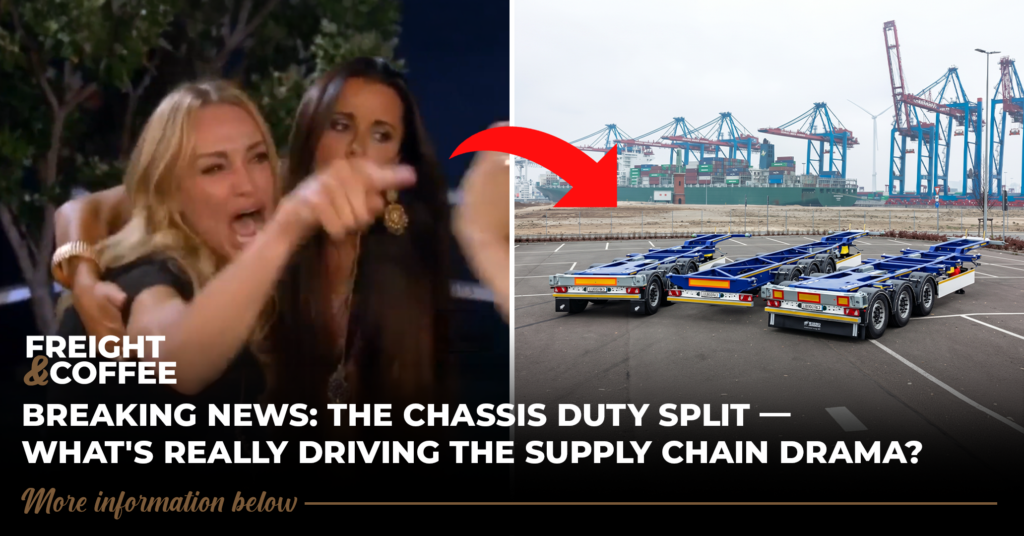
There’s a lot of noise in the shipping world right now, but this one is a certified head-turner. If you’ve been keeping an eye on global logistics, you know that the U.S. has officially finalized some pretty steep antidumping and countervailing duties on foreign container chassis coming out of Mexico, Thailand, and Vietnam.
But here’s the real story that’s getting talked about in backrooms: the decision wasn’t a unanimous slam dunk.
According to a fresh report by the Journal of Commerce (JOC), a notable split has emerged among the members of the U.S. International Trade Commission (ITC) regarding these new duties. While the duties are officially locked in, the internal debate reveals a lot about the massive tension currently gripping the global transportation industry.
The Great Debate: Foreign Under-Pricing vs. Shifting Markets
The core conflict within the ITC boiled down to a crucial question: Are foreign imports actively destroying the domestic U.S. chassis market, or are we just seeing the natural side effects of a broader economic slowdown?
- The Majority View: The domestic manufacturing coalition successfully argued that U.S. producers have been “materially injured” by unfairly subsidized, low-cost chassis flooded into the market from Mexico, Thailand, and Vietnam. To protect American factories, they insisted these penalties were an absolute necessity.
- The Dissenting View: As highlighted by the JOC, some members expressed deep skepticism. The core of their argument was whether shifting economic conditions would have caused deteriorating sales for U.S. chassis manufacturers anyway, entirely independent of foreign competition.
Why This Matters to Your Wallet
No matter which side of the ITC aisle you sit on, the immediate reality for fleet managers, intermodal providers, and logistics professionals is a major financial squeeze.
These new duties are massive. We are looking at countervailing duties of up to 76.9% on Mexican imports, antidumping rates scaling up to nearly 130% for Thailand, and a whopping 186.8% antidumping rate for Vietnam. Worse yet, these penalties stack directly on top of existing Section 232 steel tariffs.
The last time the U.S. slapped heavy duties on major chassis suppliers (like China’s CIMC back in 2021), the price of a standard chassis jumped from around $10,000–$15,000 to over $20,000–$25,000. History has a funny way of repeating itself, and domestic capacity isn’t quite ready to fully fill the gap yet. With major chassis pool shakeups happening at key gateways like LA/Long Beach simultaneously, supply chain managers are bracing for a turbulent ride.
What do you think? Are these duties a vital lifeline for American manufacturing, or is it just creating artificial friction for an already stressed supply chain?
Fuel Your Supply Chain Knowledge with Freight&Coffee
Love keeping your finger on the pulse of global supply chain news? We’ve got you covered. At Freight&Coffee, we deliver the latest industry insights, breaking news, and deep-dive podcasts tailored for logistics pros who need their data fast and fresh—just like their morning brew.
Don’t miss a beat. Check out our latest episodes and connect with our fast-growing community over on social media:
- ☕ Follow us on Instagram: @freightandcoffee
#BreakingNews #Transportation #SupplyChainNews #Logistics #Shipping #Freight #GlobalTrade