
Breaking News | Ocean Freight | Supply Chain
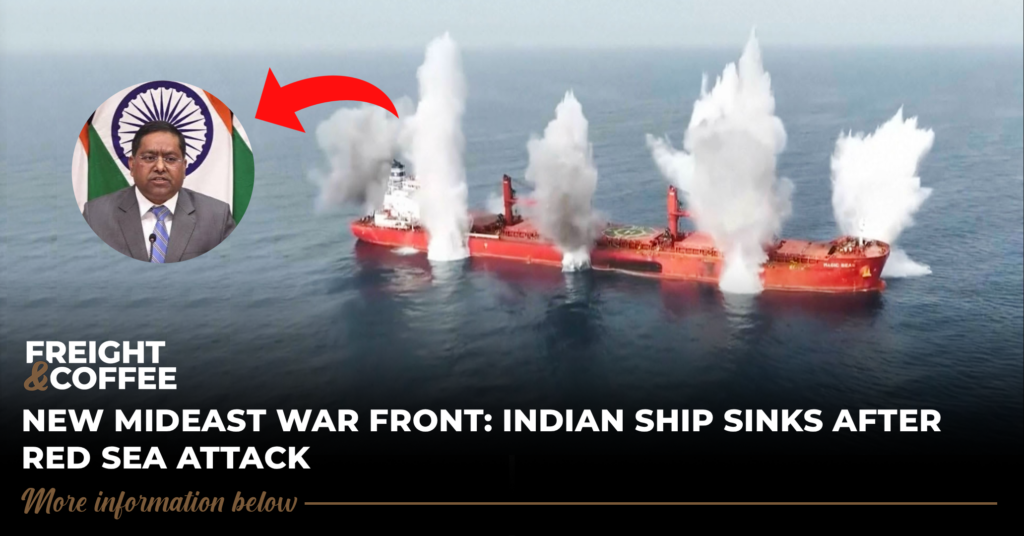
An Indian-flagged vessel sank in the Red Sea on August 4 after coming under attack, marking the latest escalation in a maritime conflict that continues to threaten global ocean freight routes.
The mechanized vessel MSV Faize Noore Oliya was struck by a projectile roughly 13 nautical miles south of Hodeidah, a Houthi-controlled port on Yemen’s western coast, according to British security monitor UKMTO. The vessel capsized and sank. All 14 crew members — 13 Indian nationals and one Yemeni — were rescued by Yemeni Coast Guard and naval units and taken to the port of Mokha for medical evaluation.
Yemeni government-aligned forces said the attack involved an explosives-laden boat. No group has publicly claimed responsibility, but Yemen’s internationally recognized government pointed to the Iran-backed Houthis, who have targeted commercial shipping in the Red Sea since November 2023.
This marks the fourth such incident since the start of August, as the broader U.S.-Iran conflict in the Strait of Hormuz continues to spill into the wider region. India’s government confirmed the ship was carrying oil from Saudi Arabia, and its foreign ministry called the continued targeting of commercial vessels “deeply worrisome,” urging a restoration of free and unimpeded navigation through international waterways.
Why it matters for supply chain: The Red Sea and Bab el-Mandeb Strait remain high-risk corridors, forcing carriers to reroute around the Cape of Good Hope, extending transit times and pushing up ocean freight costs. With attacks accelerating in frequency, analysts warn that a single high-value strike could trigger renewed airstrikes inside Yemen — further destabilizing an already strained shipping lane that carriers, shippers, and logistics providers depend on for Asia-Europe and Middle East trade flows.
Source:FreightWaves