
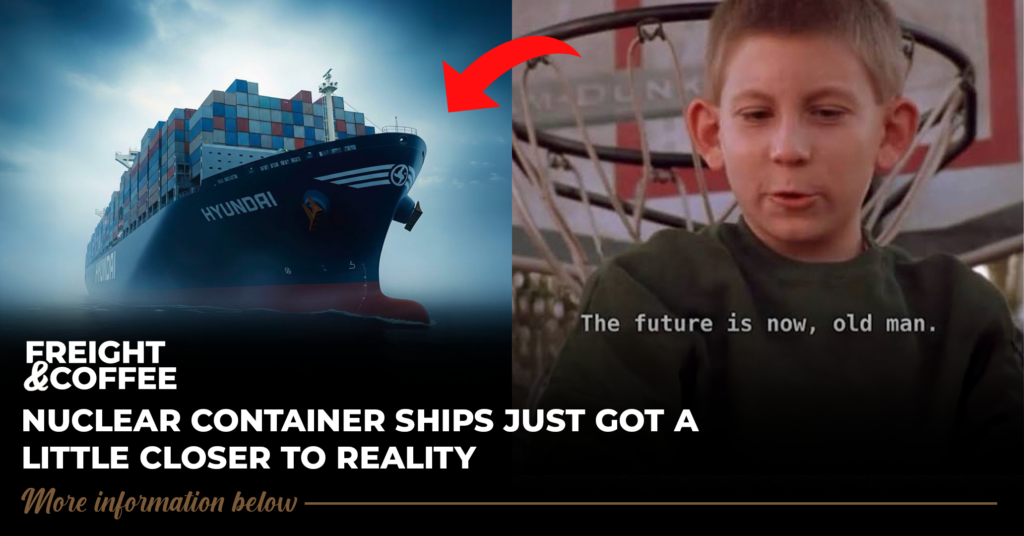
Breaking maritime news: the Port of Long Beach and the U.S. Department of Transportation’s Maritime Administration (MARAD) have signed a Memorandum of Cooperation to test small modular reactor (SMR) technology for powering commercial vessels and port operations.
What Happened
The agreement, signed this week at the Port of Long Beach, kicks off a public-private effort to bring nuclear power into commercial shipping. The port has already leased property to BlueCore Energy Inc., a private manufacturer developing barge-mounted reactor technology on-site.
MARAD issued a Request for Information back in May on U.S.-built commercial SMR tech for the marine transportation system — this MOC is the next step, moving the concept into active testing.
Port of Long Beach CEO Noel Hacegaba called it a first-of-its-kind partnership pairing federal leadership with private sector innovation to advance SMR technology for the next generation of shipping.
Why It’s a Bigger Deal Than It Sounds
If this program succeeds, it could lead to the first domestically operated nuclear-powered merchant ship since the S.S. Savannah in 1959. Right now, Russia is the only country running a nuclear commercial vessel (the Sevmorput) plus a fleet of nuclear icebreakers — the U.S. has been out of this game for over 60 years.
It also lands in the middle of a broader shakeup in ship fuel: carriers are already experimenting with LNG, ammonia, dual-fuel hybrids and even sail power. Nuclear would be the most radical departure yet.
What’s Actually Being Built
The agreement itself includes no funding or procurement requirements — it’s a framework, not a construction contract. Under the MOC, the Port, MARAD, the Coast Guard, the Department of Energy and the Nuclear Regulatory Commission will work together to define:
- Operational protocols for SMR-powered vessels
- Safety standards and inspection processes
- Best practices for servicing nuclear ships at U.S. ports
Why It Matters for Supply Chain
- Long Beach is doubling down on being a testbed. The port already moves $300 billion in cargo annually and supports 2.7 million U.S. jobs — testing next-gen tech here signals long-term investment in staying the top trans-Pacific gateway.
- Energy resilience angle. MARAD’s Stephen Carmel framed this partly around keeping maritime supply chains operational “under any contingency” — a national security consideration as much as a sustainability one.
- Long runway, not an immediate fleet change. With no funding attached yet and safety frameworks still to be defined, don’t expect nuclear boxships calling U.S. ports anytime soon — but the groundwork is now underway.
Source: FreightWaves — New test program puts nuclear container ships on the horizon
📩 Follow Freight & Coffee on Instagram @freightandcoffee for daily freight news, brewed fresh.