
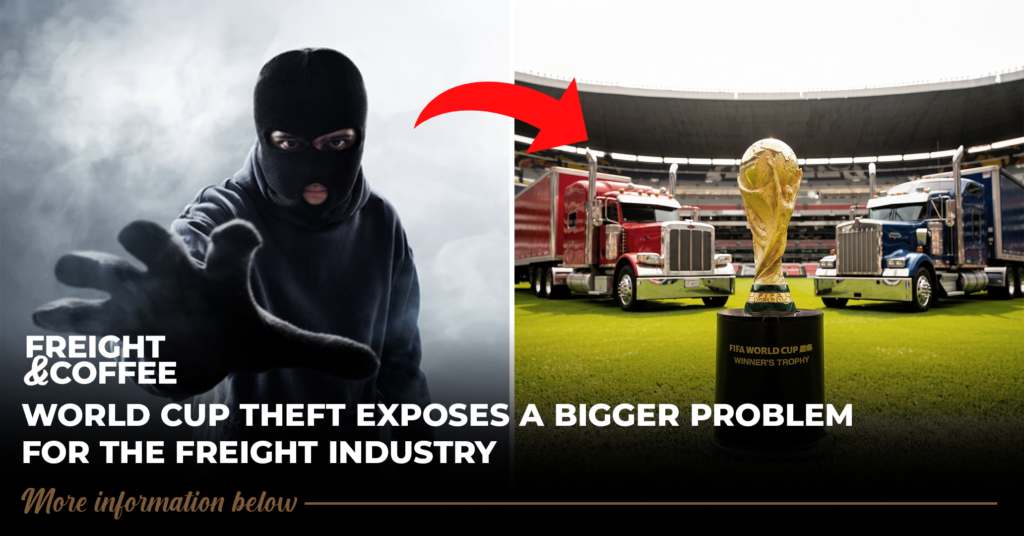
Breaking news in transportation and supply chain security: a theft connected to England’s World Cup team is sending a clear warning to the entire freight industry — small security failures can lead to very big problems.
What Happened
According to a report from FreightWaves, roughly $18,000 worth of equipment belonging to England’s World Cup team was stolen during the team’s move from its pre-tournament base in Florida to its training site in Kansas City. The theft was first reported on June 13, and it didn’t take long for investigators to act.
The Jackson County Prosecutor’s Office quickly filed charges against two individuals accused of receiving the stolen property. Under Missouri law, the charge is a Class D felony, carrying a possible sentence of one to seven years. The stolen items — boots, footballs, and training gear — were recovered, and the suspects are currently out on bond awaiting trial.
On paper, it sounds like a quick win for law enforcement. But for anyone working in transportation and logistics, this story is about a lot more than a sports equipment theft.
Why This Matters for the Freight Industry
This wasn’t just any shipment. It was cargo connected to one of the most visible sporting events on the planet, moving under what should have been tight, well-coordinated security. If a high-profile, carefully managed shipment like this one can experience a breakdown in security, what does that say about the freight moving quietly through supply chains every single day?
That’s the real supply chain news here. Cargo theft doesn’t usually start with criminals going after the biggest, most valuable loads. It starts with them testing for weak points — gaps in chain of custody, inconsistent verification, handoffs where nobody is double-checking who’s touching the freight. Once they find a gap, they remember it, and they come back.
The dollar amount lost in this case was relatively small and fully recoverable. But imagine the same security gap occurring with a shipment of pharmaceuticals, electronics, or other high-value freight. The financial and operational fallout could look very different.
The Bigger Picture: 2026 World Cup and Freight Volume
With North America hosting the 2026 World Cup, freight volume tied to the tournament is only going to increase — merchandise, equipment, food and beverage logistics, and promotional materials moving constantly between host cities. More freight movement means more opportunities for thieves to look for cracks in the system.
This is exactly the kind of breaking news that should push transportation companies, brokers, and carriers to revisit their own security protocols: documented chain of custody, identity verification at every handoff, and consistent oversight from origin to destination. It’s not about how much a shipment is worth — it’s about how well it’s protected.
Final Take
In freight and logistics, the real value of a theft isn’t always about what was taken. Sometimes, it’s about what the theft reveals. This incident is a reminder that even organizations with significant resources can have blind spots — and that vigilance has to be built into the process, not added after something goes missing.
Source: This article references reporting by Phil Brink for FreightWaves. For the full original report, visit FreightWaves.
Freight & Coffee is your source for transportation news, breaking news in logistics, supply chain updates, and ocean freight industry insights — delivered through news, podcasts, and social media.
📷 Follow us on Instagram: @freightandcoffee