
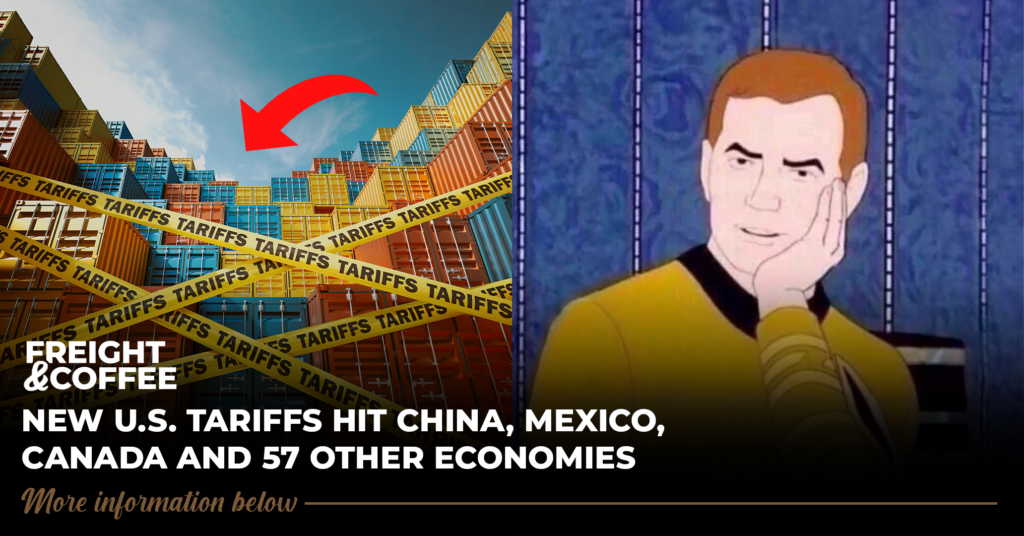
Breaking trade news: the Trump administration has restored a near-universal tariff floor on U.S. imports, rolling out a new Section 301 tariff regime covering 60 economies that account for 99.4% of everything the U.S. imports.
What Happened
The new duties took effect at 12:01 a.m. EDT Friday, replacing the administration’s temporary 10% global tariff after its 150-day run expired. Tariffs range from 10% to 12.5%, hitting major trading partners including China, Mexico, Canada, the EU, India and Vietnam.
Unlike the emergency-powers tariffs the Supreme Court struck down earlier this year, this round is built on Section 301 investigations opened in March into whether 60 economies are failing to enforce forced-labor import bans. U.S. Trade Representative Jamieson Greer said the goal is to hold trading partners to the same forced-labor standard the U.S. has enforced for nearly a century.
Who Pays What
- 10% tariff: Mexico, Canada, India, Indonesia, Malaysia, Pakistan, Bangladesh, Cambodia, Guatemala, El Salvador, Honduras, Jordan, Sri Lanka, Argentina, Trinidad and Tobago, the UK, Ecuador
- 10% (blended with MFN rates): EU, Taiwan
- Capped at 12.5%: Japan, South Korea, Switzerland
- 12.5% flat: the remaining 38 economies, including China, Australia, Brazil, Thailand, Vietnam and South Africa
What’s Exempt
Hundreds of product categories were carved out to limit disruption:
- Oil and natural gas
- Fertilizer
- Certain food products
- Raw materials with no domestic supply
- Goods that could cause economy-wide disruption
- Products not made in sufficient U.S. quantities
Goods already in transit before the tariffs kicked in are exempt through July 28, and products covered under other trade deals — including most USMCA-qualifying goods — stay exempt. USTR is also setting up tariff-rate quotas later this year for textile and apparel imports from Bangladesh, Cambodia, Indonesia and Malaysia to push more U.S. cotton and textile use.
Trade Partners Push Back
China called it another unilateral move. Australia, Brazil and Norway disputed the legal basis. The EU says the new duties still fit within its recent trade agreement with Washington, the UK says its bilateral deal keeps exports like whisky in a better spot, and Canada says talks with U.S. officials will continue.
Why It Matters for Freight and Supply Chain
- Cost pass-through is coming. With 99.4% of imports now covered, shippers across nearly every trade lane should expect landed-cost increases.
- USMCA compliance just got more valuable. Qualifying goods dodge the new duties entirely — a strong incentive to tighten certification.
- Watch the July 28 in-transit deadline. Cargo already moving before the tariff took effect has a narrow exemption window.
Source: FreightWaves — New U.S. tariffs target imports from China, Mexico, Canada and 57 other economies
📩 Follow Freight & Coffee on Instagram @freightandcoffee for daily freight news, brewed fresh.